AWS Security: Converting Instructor-Led Training to Async
Converting instructor-led AWS security training into scalable async learning without losing the
applied decision-making the live courses were built to support.
At a Glance
RoleTechnical Curriculum Developer
Scope4 AWS Security courses converted to async digital classroom format
ModalityVILT/ILT to self-paced async
ToolsArticulate Rise, Adobe Premiere Pro
Core ChallengePreserve applied security capability without live instructor mediation
Learner Feedback4.4-4.6 stars across 300+ combined reviews as of February 2026
Why This Mattered
This initiative focused on converting four instructor-led AWS Security courses into scalable async experiences while protecting applied capability. The objective was not content migration, but performance preservation in the absence of live instructor mediation.
In live sessions, instructors close comprehension gaps in real time. In async environments, the learning design has to assume that responsibility.
Business Context
AWS needed four live, instructor-led security courses converted into scalable asynchronous
Digital Classroom experiences in AWS Skill Builder.
The original courses relied on instructor mediation, live demos, and real-time clarification.
The objective was not only to increase access and scalability, but to maintain practical security
decision-making in an environment without a facilitator.
Courses included:
AWS Security Essentials
AWS Security Best Practices
Security Engineering on AWS
AWS Security Governance at Scale
Domain Sensitivity
Security training carries real operational consequences. Misapplied configuration decisions or misunderstood governance models can introduce production risk. The async format therefore needed to preserve applied reasoning, not just conceptual familiarity.
Role and Ownership
I led the async conversion design for all four courses. While overall course flow and lab
infrastructure were inherited from the original VILT sessions and lab engineering teams, I owned:
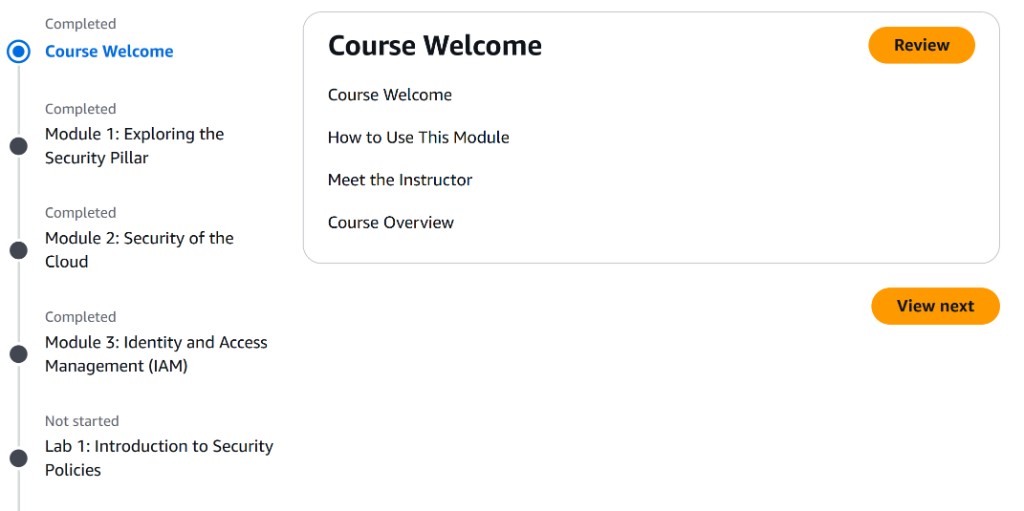
Segmentation of multi-hour recordings into modular lessons
Removal of redundant lab walkthrough demonstrations
Conversion of lecture-heavy content into interactive learning blocks
Integration and modification of formative assessments
Accessibility implementation aligned with enterprise standards
Across the four-course series, I established a consistent async structure pattern to reduce
cognitive friction and help learners move between courses more easily. Lab environments and core
technical source material were developed by subject matter experts and the lab engineering team.
That structure, where I owned instructional design decisions while relying on SME expertise for
technical content, is close to the faculty-partnership model common in academic instructional design.
Constraints and Design Requirements
Converting technical security training from VILT to async introduced clear design risks:
Loss of real-time clarification
Increased passive video consumption
Reduced hands-on participation
Dense, high-cognitive-load technical content
Limited post-launch performance telemetry
Security misconfiguration has real operational impact. A direct lift-and-shift of source content
would have weakened the applied nature of the training, so each conversion choice was treated as
a design decision rather than a formatting step.
Instructional Strategy
Although the brief was framed as a conversion request, the work still required clear instructional
criteria. In practice, I treated the redesign around four design targets: preserve applied
decision-making, reduce passive consumption, support self-paced navigation and review, and maintain
accessibility and learner support in the absence of live instruction.
Those targets shaped sequencing, interaction choice, assessment placement, and media treatment
throughout the four-course series. The result was not a direct format translation, but a deliberate
async redesign aimed at protecting performance under new delivery constraints.
Design Decisions
1) Segment multi-hour sessions into focused lessons
Challenge
Long live sessions are difficult to revisit and cognitively heavy in an async format.
Decision + Intended Effect
I broke modules into focused 10-15 minute lessons, each with a clear objective and takeaway. That improved navigability, reduced fatigue, and better supported both continuous and return-and-resume study behavior.
2) Remove redundant walkthrough videos when labs already scaffolded practice
Challenge
Full demonstration videos duplicated guided lab support and encouraged passive observation.
Decision + Intended Effect
I removed segments that repeated lab instructions and prioritized learner execution in sandbox environments. The intended effect was to reinforce hands-on practice as the primary learning mechanism instead of narrated observation.
3) Convert slide-heavy lecture segments into interactive learning blocks
Challenge
Instructor-led slide narration does not translate effectively to self-paced engagement.
Decision + Intended Effect
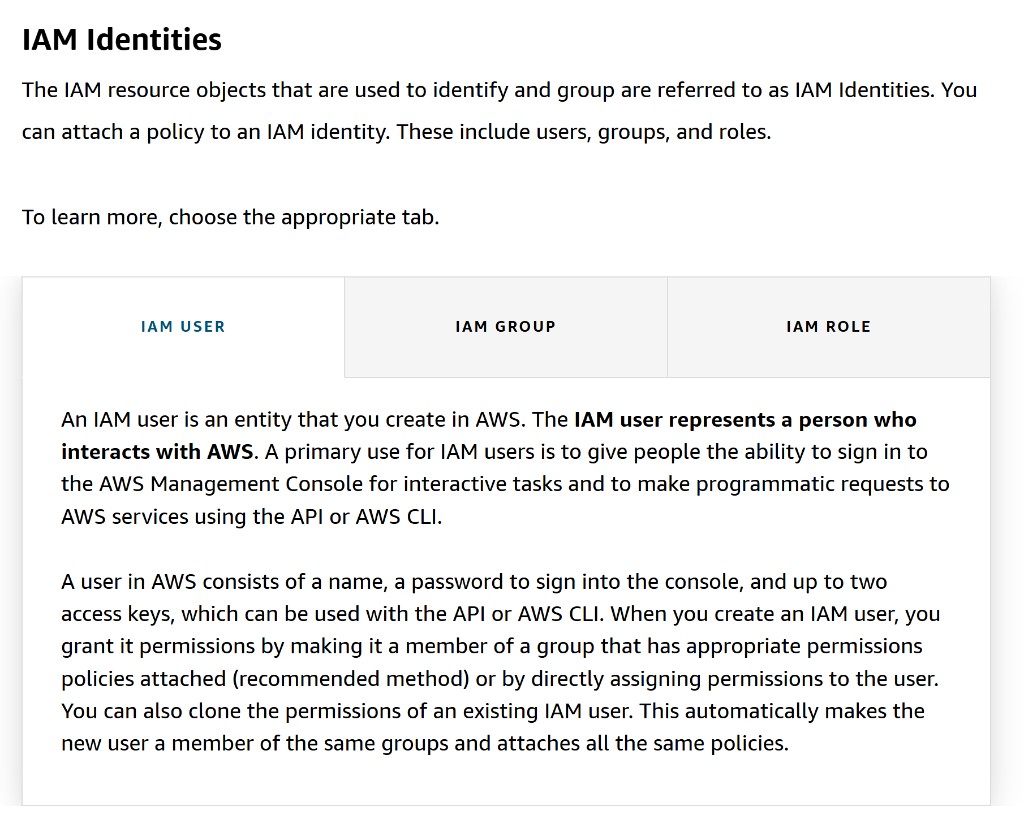
I replaced passive lecture blocks with structured interactions that asked learners to process and apply concepts as they moved through the lesson. That increased active participation and improved conceptual processing before learners entered labs.
4) Integrate formative checks at transition points
Challenge
End-of-module checks identify misunderstandings too late in the learning sequence.
Decision + Intended Effect
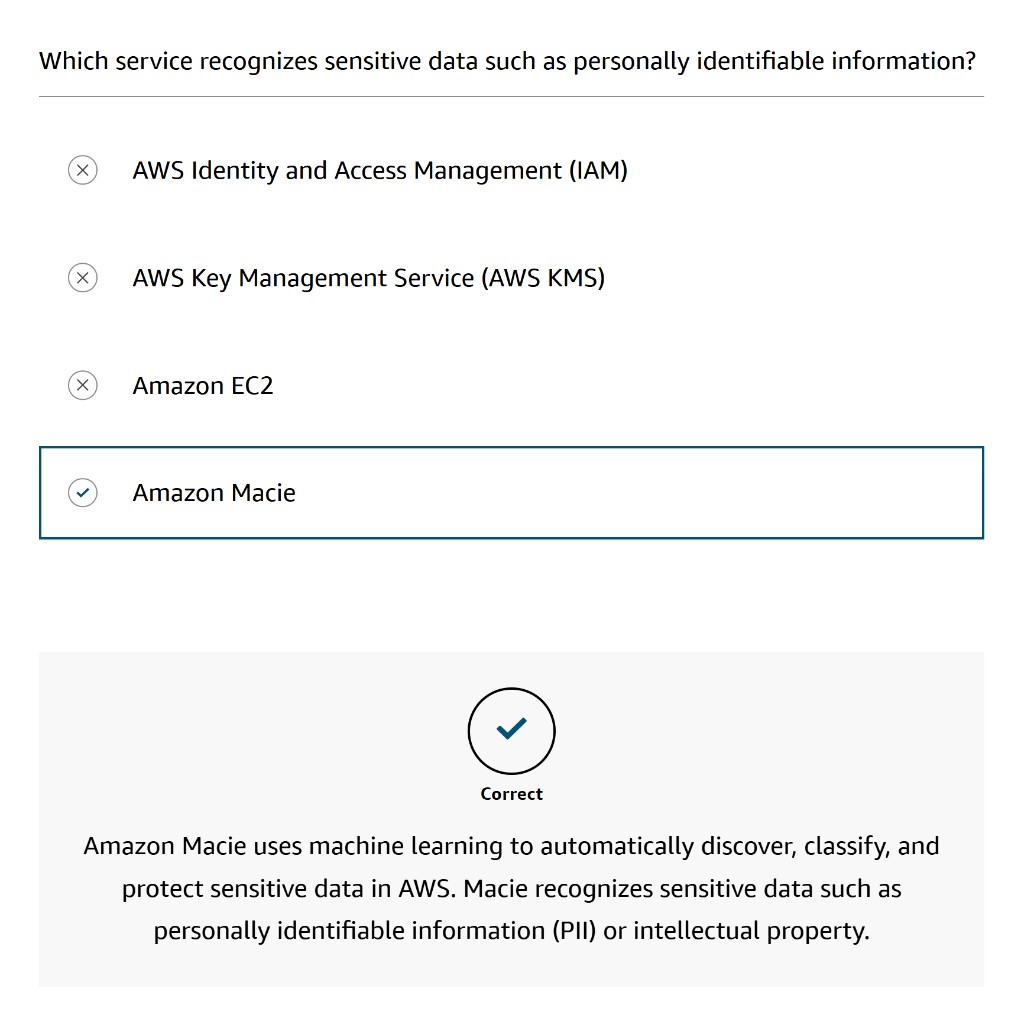
I embedded knowledge checks at decision points and paired them with feedback targeted to specific misconceptions. This surfaced and corrected errors before learners transitioned into applied lab activities.
Accessibility Integration
Accessibility was treated as a core design constraint, not a post-production QA step.
All content aligned with enterprise accessibility expectations grounded in WCAG principles. This
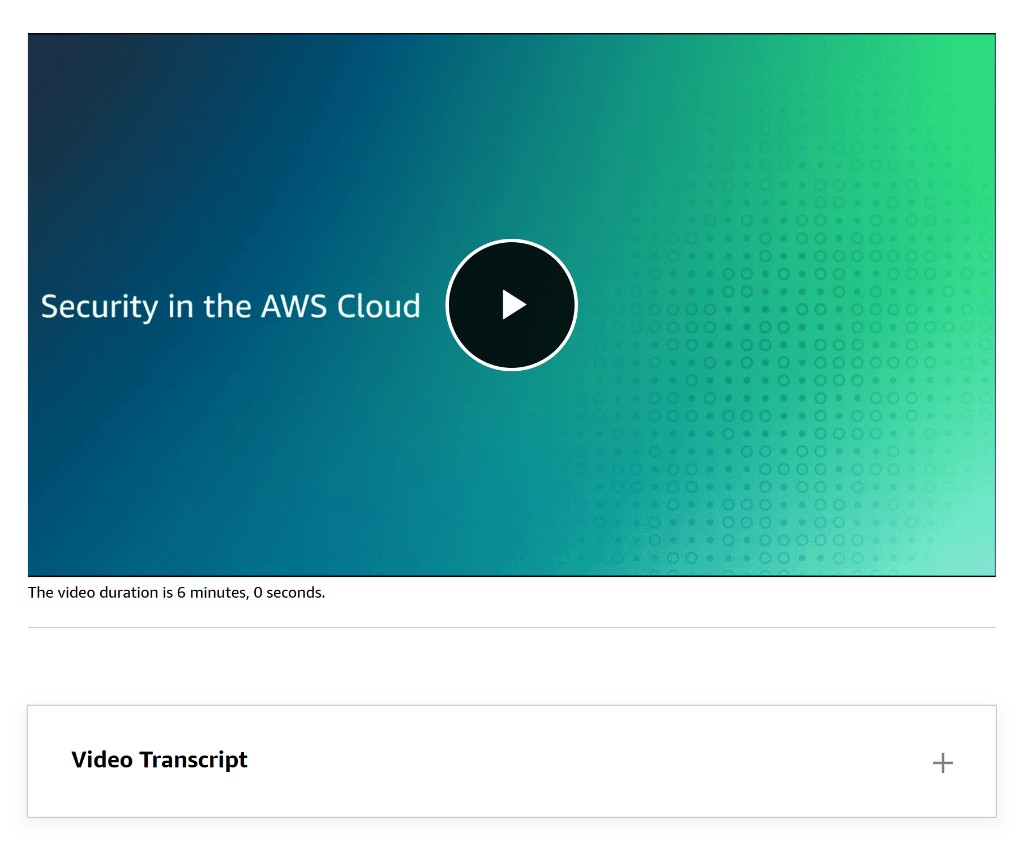
included accurate captions and transcripts for video content, meaningful alt text, readable
structure, accessible contrast, and hierarchy patterns that supported screen reader navigation.
My participation in AWS's internal accessibility advocacy group (CDa11y) informed this approach.
In practice, I paired self-review with peer feedback to ensure design quality and inclusivity held
up in the absence of instructor mediation.
Representative Examples
Selected screens from the converted courses. Click any screenshot to view details.
Course Navigation + Content ViewIAM Tab InteractionKnowledge Check with FeedbackAccessible Video + Transcript
Outcomes and Gaps
At launch, available measurement was limited to completion and learner satisfaction.
As of February 2026, the four courses hold learner ratings between 4.4 and 4.6 stars, with over 300 combined reviews across the series. Both the async versions and the original ILT offerings remain active, supporting flexible access across modalities.
While satisfaction does not measure applied security transfer, it does suggest the redesign did not
create a noticeable drop in learner experience during the modality shift.
Stronger validation in future efforts would include behavioral signals such as:
Lab initiation and completion patterns
Assessment performance tied to applied decision-making
Lesson-level drop-off analysis
Defining observable performance indicators earlier in the conversion lifecycle would allow modality decisions to be evaluated beyond perception metrics.
Reflection
This initiative reinforced that ILT-to-async conversion is a design challenge, not a formatting workflow. When instructor mediation is removed, content structure, feedback timing, interaction design, and accessibility quality become the mechanism of instruction.
This work reflects how I approach technical curriculum design: protect applied performance, improve
accessibility and scalability within real constraints, and make design choices based on what learners
need to do, not just what content exists.
Want to talk shop?
If you're hiring, collaborating, or just curious, feel free to reach out.